

Markets Mixed as Cooling Inflation Helped Balance Shifting Labor Dynamics
Equity markets were little changed for the week as AI-related anxiety persisted, and investors digested a heavy slate of both new and delayed economic releases. Cloud technology firm Oracle was particularly notable on several entirely disparate fronts: reports that the company lost a major funding partner for one of its key data centers, news that it would participate in a joint venture to manage TikTok’s U.S. operations, and headlines surrounding founder Larry Ellison pledging Oracle stock as collateral for a reported $78 billion hostile bid by Paramount to acquire global media company Warner Bros.
The week’s economic data was mixed but ultimately punctuated by November’s inflation and labor reports, which markets largely took in stride. The Dow Jones Industrial Average finished slightly lower, while both the S&P 500 and Nasdaq Composite edged modestly higher, leaving major indexes solidly positive for the year and trading near record territory.
1. Inflation Continues to Cool, but Prices Remain Elevated
November’s inflation report was widely anticipated and reinforced the broader soft-landing narrative. Both headline and core inflation continued to moderate, falling below 3% and supporting the view that the Federal Reserve retains flexibility as we enter 2026. That said, while the rate of inflation is slowing, price levels remain elevated—particularly across core services such as housing, insurance, and healthcare. While easing inflation supports equity valuations through lower interest-rate expectations, affordability remains a meaningful concern that could carry both economic and political implications in the year ahead.
2. Employment: Rising Unemployment Without Rising Layoffs
The November employment report captured investors’ attention on Thursday with a rise in the unemployment rate to 4.6%, its highest level since October 2021. However, the underlying details were more nuanced than the headline suggests. Total employment actually increased by roughly 64,000 jobs during the month, and the rise in unemployment was driven by increased labor force participation rather than layoffs. While a growing labor force is generally constructive, it does highlight a developing issue: more individuals are seeking work at a time when hiring momentum has slowed.
3. Secondary Data Reinforces a Resilient — but Selective — Consumer
A host of secondary and delayed economic data was released this week, including existing home sales and consumer sentiment. These reports largely confirmed familiar themes: housing activity remains constrained by affordability and higher mortgage rates, while consumer sentiment reflects cautious optimism as households balance easing inflation and rising wages against still-elevated living costs. Additional delayed data from earlier months provided further context, including October retail sales, which—excluding more volatile categories such as autos, gasoline, building materials, and garden stores — rose 0.85%, well above expectations. Taken together, these indicators point to an economy that remains resilient, though increasingly selective in how growth is generated.
As we close out 2025, we are reminded — once again — that market predictions are inherently a fool’s errand. After more than fourteen years of writing a year-end outlook, we have learned at least that much. Even so, it is hard to ignore the setup for markets heading into 2026. Economic fundamentals are moderating but remain broadly balanced, while revenue and earnings estimates for 2026 remain strong. Technology and communication services are once again expected to lead earnings growth next year, with all eleven S&P 500 sectors projected to be positive and the index in aggregate expected to deliver roughly 15% year-over-year earnings growth.
Valuations and the risk of an AI bubble are certainly worth monitoring, but some measure of discipline—or perhaps fear—has begun to temper the most aggressive expectations in recent months. There are certainly no guarantees as to how the next year will unfold, but relative to a year like 2025—marked by extraordinary policy uncertainty across monetary, fiscal, and trade fronts—it is difficult to imagine 2026 being more chaotic. And yet, despite that backdrop, 2025 proved to be a good one for investors.
In 2026 we’re likely to see inflation pressures continue to ease, and as it does, the market’s focus is likely to shift more decisively toward employment and the durability of consumption. AI-driven productivity gains support margins and earnings, but they may also weigh on hiring at the margin, making labor dynamics a more important variable as the cycle matures. For now, those risks appear more prospective than immediate, and taken together, the combination of moderating inflation, resilient earnings expectations, and a more settled policy environment provides a constructive foundation as markets turn the page to 2026.
The Week Ahead
With the holiday season now underway, economic data releases and market activity are expected to be lighter in the weeks ahead. Subsequently, our weekly market commentary will take a brief hiatus, picking back up after the new year. We thank you for your readership and feedback over the past year, and we wish you a happy holiday season. We look forward to reconnecting in 2026.
Stewardship, Perspective, and the Path Ahead
A Holiday Message from Porter L. “Buddy” Ozanne
Founder & President
As the weeks ahead fill with holiday gatherings and celebrations, it’s a natural time to pause and reflect—on where we have been, what we have learned, and where we are headed. Like any well-planned journey, the past year reminded us that progress is rarely linear. Markets experienced both periods of enthusiasm and moments of panic, yet time and again, thoughtful planning, discipline, and patience—the principles that anchor our work at Probity—prevailed.
At our core, we at Probity Advisors are stewards. We are focused on helping individuals and families preserve, protect, and thoughtfully grow their wealth — however they may define that for themselves. Over the past 50 years, I have had the privilege of building long-standing client relationships, many of which span multiple generations. These relationships give us a front-row seat to what truly matters—and they remind us that wealth is ultimately a means, not an end. I believe that true wealth extends far beyond the figures on a financial statement. It is about creating a life with intention and purpose — the freedom to make thoughtful choices, provide for those you care about, support causes that matter to you, and leave a meaningful legacy for future generations.
For me, this perspective becomes especially clear during the holidays. My wife, Linda, and I will spend cherished time with our children and grandchildren – a reminder that lasting returns come from relationships, shared values, making memories, and the time we intentionally invest in the people who matter most in our lives.
We look to the year ahead with optimism grounded in preparation, perspective, and gratitude—especially for the trust you place in us—as we help you plan for what matters most to you. We wish you and your family a joyful holiday season and a healthy, well-planned year ahead.
Sincerely,
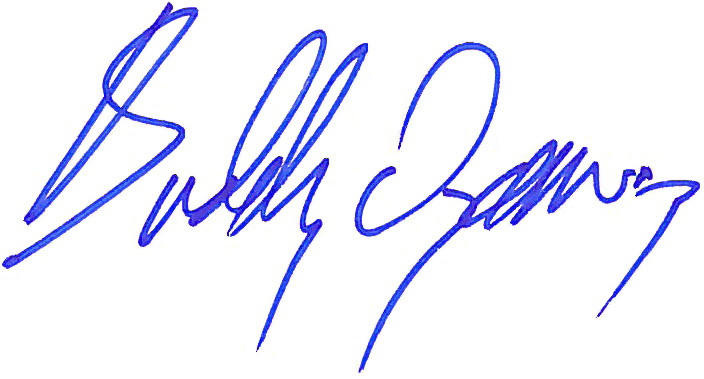
Porter L. “Buddy” Ozanne